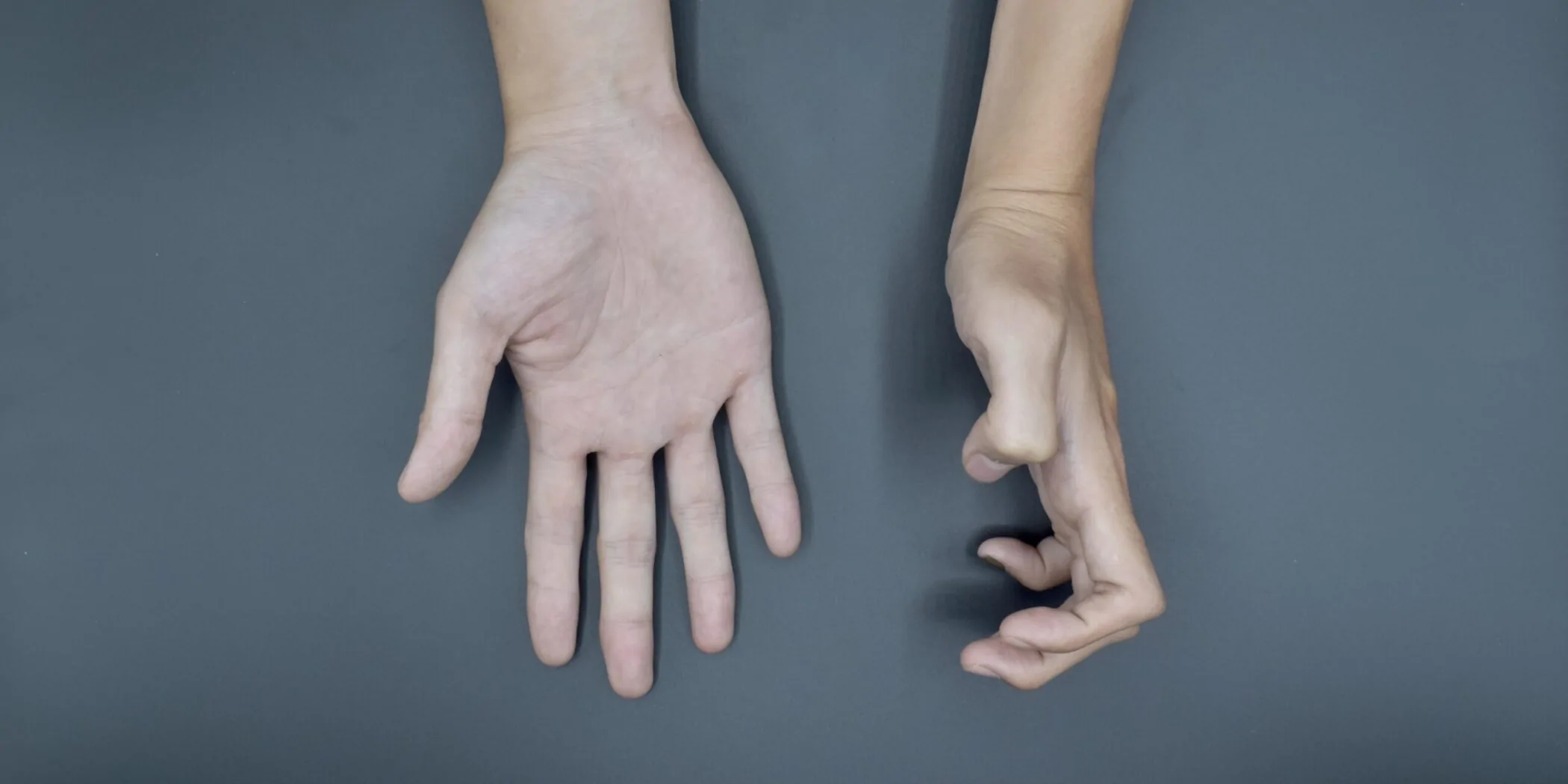
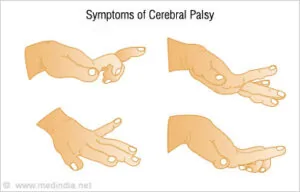
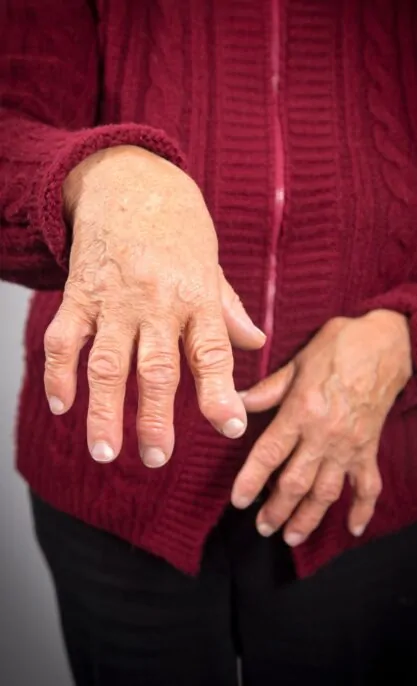
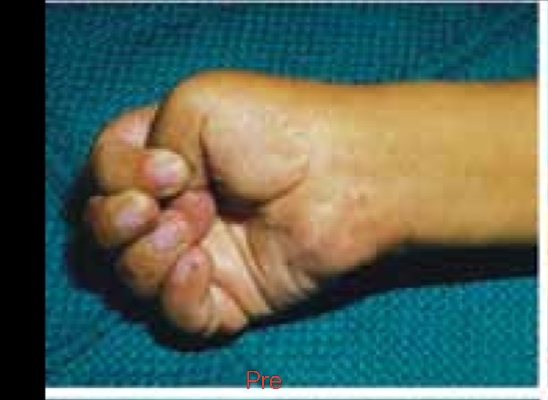
Cerebral palsy (CP) is a developmental disorder caused by brain injury before or after birth during a child’s developmental years. It is commonly associated with low-birth-weight babies, prematurity, jaundice, genetic disorders, maternal infections, and intracranial bleeding.
About Kayakriti and Your Surgeon
A short walk-through of our Lucknow clinic, plus a brief introduction from Dr. Amit Agarwal.
Cerebral palsy (CP) is a developmental disorder caused by brain injury before or after birth during a child’s developmental years. It is commonly associated with low-birth-weight babies, prematurity, jaundice, genetic disorders, maternal infections, and intracranial bleeding.
Involvement of Hands and Feet
CP can affect one or both hands and/or lower limbs, leading to spasticity, muscle tightness, stiff joints, limited mobility, an abnormal gait, toe-walking, and contractures.
Diagnosis of Hand Deformity in CP
Hand deformities often result from spasticity and can hinder a child’s daily activities. They are typically diagnosed if a child has:
Thumb in the palm beyond the age of one and a half years.
Neglected and shortened arms with spasticity.
Hand contracture depending on the location of brain damage.
Importance of Early Detection
Early detection of hand deformities is crucial for better management. However, these deformities are challenging to recognize in the initial years due to delayed developmental milestones. Diagnosis typically occurs around the age of five.
Associated Disabilities in CP
Children with CP may also have associated disabilities, such as communication impairments, vision and hearing issues, and mental impairments, along with a history of seizures. All these aspects need to be considered when assessing a child with a spastic hand.
Treatment Goals
The goal of treating a spastic hand in children with CP is to develop and maintain hand manipulation skills, coordination, and basic hand functions. This includes holding objects for feeding and play. In older children, the focus extends to skills like writing, manipulation, activities of daily living, and social interactions.
Management of Spastic Hand
Treating a spastic hand is a team effort that involves parents, surgeons, physiotherapists, pediatricians, occupational therapists, nurses, and psychologists.
Treatment in Younger Children (Under 4 Years)
In children under four, a combination of physical therapy, occupational therapy, and splinting should be attempted to improve functional activities, flexibility, and joint suppleness. Physical therapy focuses on a range of motion exercises and stretching to improve motor function.
Occupational therapy aims to enhance the child’s ability to perform daily activities at home and school, focusing on strength improvement and bilateral hand coordination. Splints may be used for better hand positioning.
Treatment in Older Children (Over 4 Years)
For older children, an intensive therapy program is developed, incorporating physical and occupational therapy along with splints. Botox injections may be administered to relax spastic and contracted muscles, making them more amenable to physical therapy.
Surgery for Spastic Hand
If hand deformities persist or do not improve after Botox injections, surgery is considered. The ideal age for surgery in children with CP is typically between 8 to 12 years, although it can be performed in adults as well. Surgery can lead to significant improvements in hand function and the quality of life for both children and their parents.
Prerequisites for Surgery
For children with CP to be eligible for surgery, they should meet certain prerequisites:
Sufficient intelligence to understand and cooperate in post-operative re-education.
Strong family support.
Continued use of the hand.
Preservation of basic sensations of touch and pain, as well as the ability to recognize physical characteristics of touched objects.
Surgical Planning
Surgical planning for children with CP depends on the child’s intellectual capacity, hand usage, and sensations:
Children with low IQ (<50) and reduced hand use may undergo surgery for cosmetic correction of contractures.
Children with IQ >50, good hand control, and sensations aim for functional improvement.
Surgeries are performed in multiple stages, with hand deformities corrected before lower limb issues to prepare for mobility aids.
Types of Surgery
Various surgical procedures are performed to address hand deformities in children with CP:
Muscle Lengthening: Surgical lengthening of muscles aims to relieve tightness in the hands and fingers, improving wrist and hand movements.
Tendon Lengthening: Reduces hand contractures, with joint-oriented physiotherapy necessary post-surgery.
Tendon Transfer: Enhances hand and wrist function by rerouting a functional tendon to provide movement to non-functional areas.
Tenotomy/Myotomy: Cutting tendons or muscles can improve muscle function and control, increasing upper limb abilities.
Osteotomy: Bone alignment is corrected to improve posture and function.
Arthrodesis: Severe cases of spastic hand may require wrist arthrodesis in a functional position to enhance daily activity performance.
Properly planned and performed surgeries significantly enhance the quality of life for children with CP, enabling them to lead more independent lives.
See the difference
Before & After — Cerebral Palsy Hand Deformity
Drag the handle to compare. All photos are real patients shared with consent.
Before
After
Images shown are intended to provide general treatment insight only.
Every patient is unique, and outcomes may vary depending on individual
condition and treatment plan.
Common questions
Frequently asked questions
What is Cerebral Palsy (CP), and how does it differ from other developmental disorders or conditions affecting children?
Cerebral Palsy is a developmental disorder caused by brain injury before or after birth during a child’s developmental years. It differs from other developmental disorders based on its specific association with brain injury and its impact on motor function.
What are the common causes of Cerebral Palsy, and what factors contribute to the development of this condition in children?
Cerebral Palsy is primarily caused by brain injury during early development. Factors contributing to its development can include prenatal, perinatal, or postnatal factors that affect the brain.
What are the key signs and symptoms of Cerebral Palsy, and how do they affect the daily lives and abilities of affected children?
Symptoms of Cerebral Palsy may include motor impairments, muscle stiffness, and coordination difficulties. These symptoms can affect a child’s mobility and daily activities.
How is Cerebral Palsy diagnosed, and what diagnostic methods are used to assess the condition in children?
Diagnosis typically involves a clinical evaluation by a pediatrician or neurologist. Additional tests, such as MRI or brain imaging, may be used to confirm the diagnosis and determine the type and severity of CP.
How can Cerebral Palsy be managed, and what treatment options are available to address the specific needs of children with this condition?
Management of Cerebral Palsy often includes a multidisciplinary approach that may involve physical therapy, occupational therapy, speech therapy, medication, assistive devices, and, in some cases, surgical interventions. The specific treatment plan is tailored to the child’s unique needs.
What are the advantages of choosing a specialized clinic like Kayakriti Clinic for the treatment and management of Cerebral Palsy, and how do they ensure comprehensive care for affected children?
Kayakriti Clinic specializes in the management of Cerebral Palsy, offering a team of experts with extensive experience in pediatric neurorehabilitation. They provide a patient-centric approach, including tailored therapies and interventions to optimize a child’s function and quality of life.
Real stories
What our patients say about Kayakriti
★★★★★
"Kayakriti Plastic Surgery & Dental Clinic is one of the best clinics — excellent doctors and a very professional team. The clinic is clean, well-maintained, and uses advanced technology. Doctors explain everything clearly and make you feel comfortable throughout the treatment. Highly recommended for both plastic surgery and dental care."
★★★★★
"My big brother had a critical accident in August 2025 — his right foot was injured badly. Thanks to Dr Amit, the plastic surgery was a great success and now he is walking on his feet. Dr Amit is polite, humble, and guided us like family."
★★★★★
"Dr Amit Agarwal is really a very good plastic surgeon — he operated on my leg. The treatment is really very good and the staff behaviour is very nice."
★★★★★
"Dr Amit Agarwal performed surgery for diabetic foot on my father. We were very troubled before going to him; after his treatment the condition is much better. He debrided all the infection and did grafting on the same."
★★★★★
"Dr Amit Agarwal operated on my patient for a congenital defect. A renowned plastic surgeon of Uttar Pradesh with excellent post-operative results. He explains every step of the treatment very nicely and is very determined towards his work."
★★★★★
"Dr Amit is very approachable, so it is easy to talk to him and ask all our queries. Before operating he explains the entire process with all the pros and cons. His staff is well-trained and well-behaved — I had a wonderful experience."
★★★★★
"Dr Amit Agarwal operated on my sister who got burnt two years back, leaving burn scars in her neck area. With the help of tissue expanders he has cured her scars to the utmost. Thank you sir for the treatment."
★★★★★
"Dr Amit Agarwal operated on my child for a congenital defect and has delivered brilliant results. We are completely satisfied with his treatment and recommend him to everyone."
★★★★★
"I consulted Dr Amit Agarwal for my son's gynaecomastia operation. His results have been very good — now my son is much more confident and comfortable with his looks after the operation."
★★★★★
"Dr Amit operated on my patient for a lip augmentation surgery to give her lips a proper cosmetic shape. The post-operative results are very good — she is very satisfied."
★★★★★
"Dr Amit Agarwal operated on my son for gynaecomastia. Due to the puffiness in his chest he felt very embarrassed in public. Thanks to Dr Amit's treatment my son feels much better aesthetically and has gained a lot of confidence about his looks."
★★★★★
"We consulted Dr Amit for cosmetic correction of my daughter's facial profile. He brought her upper jaw forward, surgically improving her appearance. It was a tough operation but the results are phenomenal — we are really satisfied with the look now."
★★★★★
"My son had his fingers joined since birth, causing a lot of functional problems. Dr Amit Agarwal performed syndactyly release on him. Now he is much better and there were no issues regarding post-operative complications."
★★★★★
"I got my rhinoplasty done under Dr Amit. The shape of my nose wasn't nice and my facial profile was getting hampered. Dr Amit elevated my nose to give it proper shape — now it is looking fine and I am very satisfied."
★★★★★
"Dr Amit Agarwal operated on my patient for deformed lips. He gave my patient a very aesthetic appearance and we are highly satisfied by the surgery. The cosmetic correction was successful with no complications."
★★★★★
"Dr Amit Sir is really a very good plastic surgeon — great nature, very cooperative staff, excellent scope for cosmetic treatment. Very happy and satisfied with the treatment. It really changed my life and enhanced my confidence."
★★★★★
"Dr Amit Agarwal performed cosmetic surgery on my nephew, who was facing a lot of issues with confidence due to gynaecomastia. After Dr Amit's treatment he is much better and has a boosted confidence level."
★★★★★
"I met a road accident two months back and my ring finger fractured. My orthopaedic doctor recommended Dr Amit for the joint fracture management. After he operated, my condition is much better."
★★★★★
"Dr Amit Agarwal operated on my patient for vascular malformation. He removed the complete swelling through an operation which went well and the results are good. The staff kept us well informed at every step and the whole process went smoothly."
★★★★★
"My patient wasn't satisfied with the aesthetic appearance of her lips. Dr Amit performed a lip augmentation surgery — it made her lips look more full and richer. She is very satisfied with the results."
★★★★★
"We were very troubled after my son met a road accident in which his jaw got fractured. Dr Amit confirmed the diagnosis quickly and proceeded for the surgery — through plating he joined the bones of the jaw and stabilised it. The condition now is much better."
★★★★★
"My brother is diabetic and hurt his leg; the wound was not healing for a long time. Dr Amit debrided all the infected part and covered it with a flap. The wound is now healed — we are lucky we got the correct treatment on time."